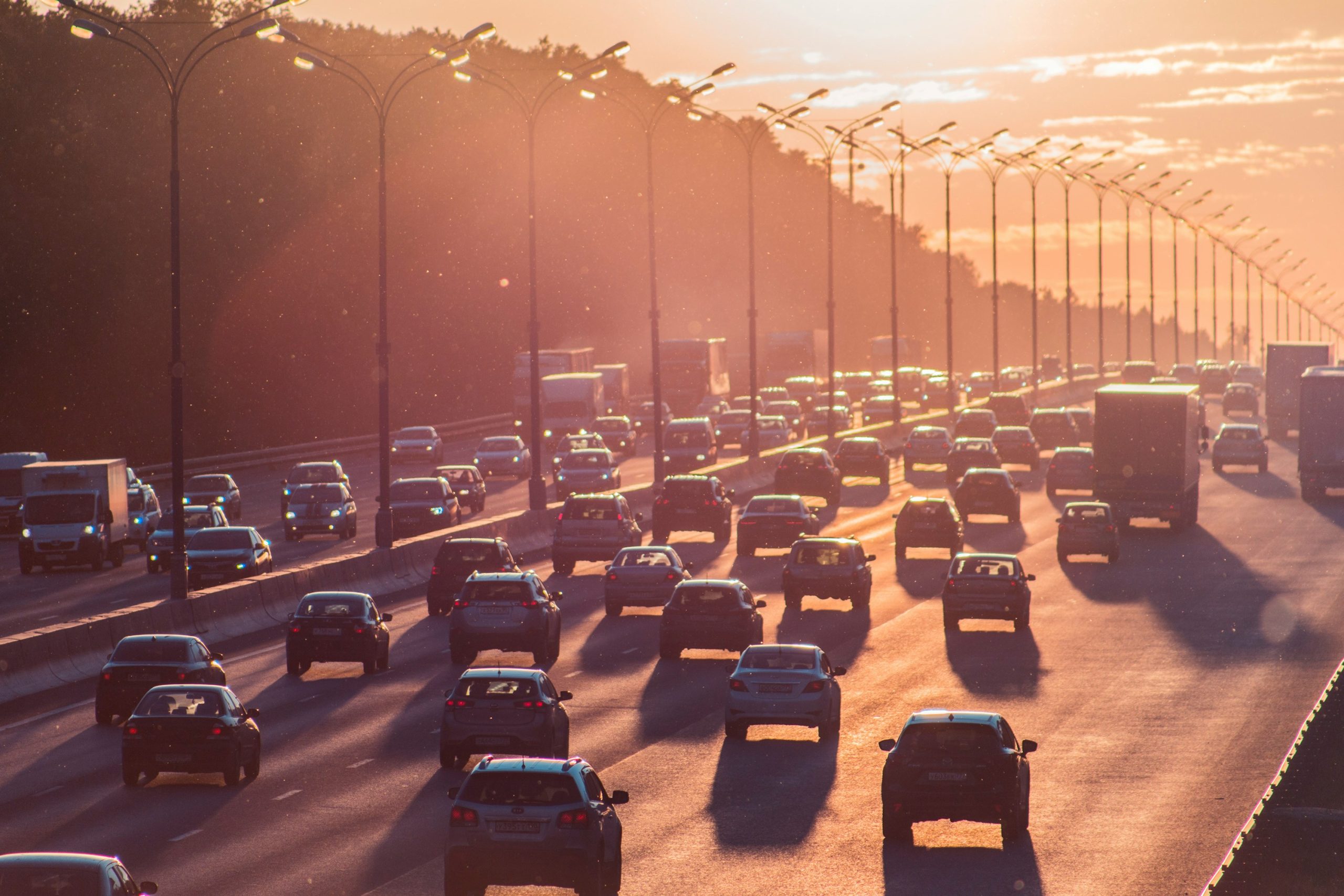
One evening, I was driving back to Los Angeles from Riverside and couldn’t help but notice a truck in the carpool lane that stayed only 10 feet behind the small sedan ahead for about 15 minutes. Based on my speed of 65 miles per hour, they were probably going at the same speed. Since I specialize in anger management and road rage, I found this both dangerous and fascinating.
I kept my distance, of course, since I know the risks of cars driving other cars off the freeway as part of road rage, and I kept thinking that was going to be the result of this particular aggressive driving. What was noticeable was that the sedan in the front did not let the truck tailgating it for such a long distance bully them, and they kept at their regular speed in the carpool lane for a good 15 miles. At some point, I thought perhaps they were friends and liked driving so close to one another. Eventually, the freeway split, and the truck left the freeway. I took a deep breath, knowing that no major incident would occur.
What is Road Rage?
Road rage is an intense emotional reaction– often anger, frustration, or hostility– that occurs when a driver feels threatened, disrespected, or blocked from reaching their goals. Driving is a stressful daily activity, especially in Los Angeles traffic. The stressors from home or work often show up in the response to other drivers, the folks who don’t matter.
Rage occurs when the “brain goes offline”, and we react in a manner that can be violent and scary. The actions feel uncontrollable and may not be intentional. The person who rages often does not remember what happened; in other words, they black-out. Aggressive driving, on the other hand, is very intentional and controlling.
Driving aggressively takes many forms, but when we violate driving laws and risk the safety of others, it can be dangerous. Road rage is a term used to describe a driver’s behavior as aggressive, oftentimes triggered by their expectations getting violated, stress, frustration, or feeling provoked by “dumb drivers.” That being said, though this article refers to aggressive driving as road rage, technically, it is driving aggressively, not road rage, meaning the driver can control their actions but chooses not to. This is where anger management is helpful, guiding individuals to recognize what is within their control and how to navigate their anger on the road.
In court-ordered anger management classes, road rage is one of the most common topics that comes up. It affects safety, relationships, and emotional well-being, making it vital to understand what fuels it and how to reduce its impact.
What Does Road Rage Look Like?
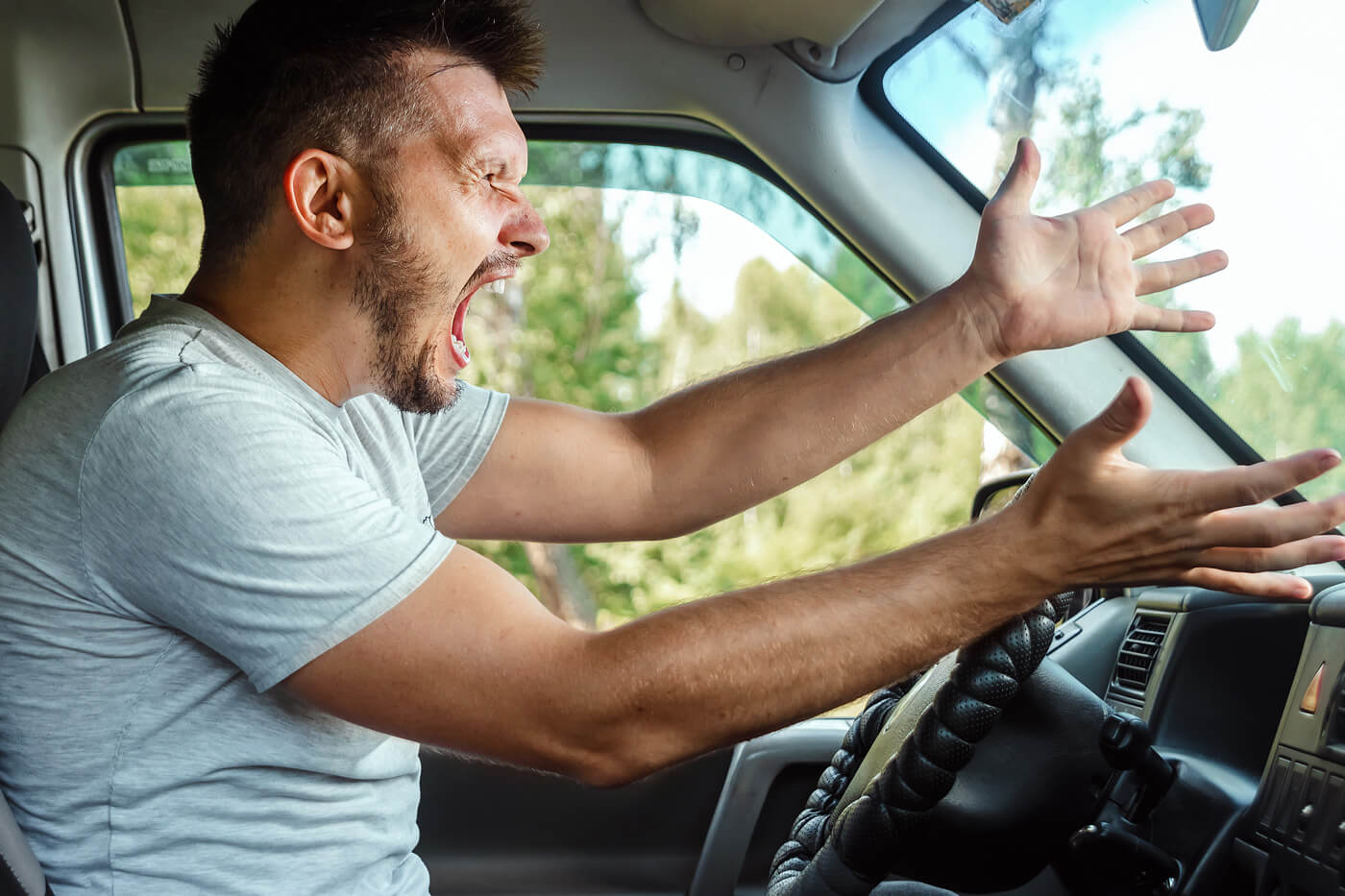
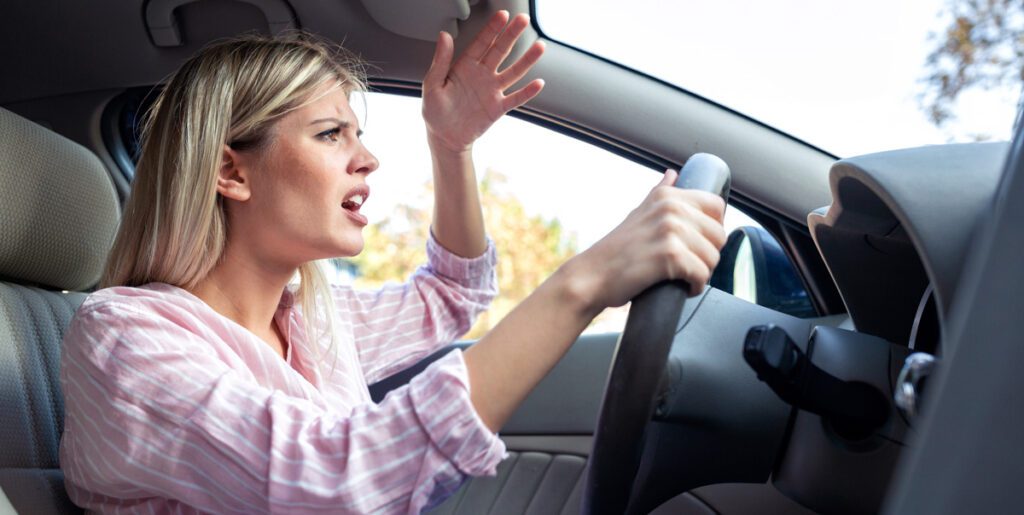
Aggressive driving or road rage can take many different forms, including but not limited to:
- Yelling and/or cursing at other drivers
- Making aggressive hand gestures at others
- Speeding
- Running stop signs or red lights
- Tailgating the driver ahead intentionally
- Stopping and getting out of the car to confront the other driver
- Cutting off other drivers
- Blocking another vehicle from changing lanes
- Forcing the driver off the road
- Honking excessively
- Lane changes without signaling
- Driving on the emergency lane
- Driving recklessly and carelessly
- Racing
- Excessively flashing headlights to provoke the driver ahead
- In extreme cases, hitting the other car and causing harm
Why Do People Get Into Road Rage?
The general idea is that we get angry when our expectations are violated and something gets in the way of our goal. When trying to understand why someone gets angry while driving, it’s important to review their expectations and goals.
Driving is one of the few daily activities where people are surrounded by strangers, moving quickly, each with their own set of expectations, needs, stressors, and stories. Yet, we often perceive interactions as personal.
Some emotional and cognitive contributing factors leading to road rage include:
Stress building
- Work
- Running late
- Family responsibilities
- A packed schedule
- Emotional struggles from earlier in the day
Lack of control
We can’t control what others do, which becomes especially concerning when their driving is erratic and unpredictable. This leads to feeling powerless.
Anonymity
We feel more entitled and bolder behind the wheel, especially because no one knows us. As a result, there is no social consequence, and the car feels like a protective barrier.
Drivers being disrespectful
We perceive their driving as personal, intentional, and disrespectful
- “They cut me off on purpose.”
- “They’re tailgating me to bully me to drive faster.”
- “This idiot won’t let me through.”
Drivers can be distracted or stressed. Often, they are unaware of how they are driving and how they are impacting those around them.
In summary, road rage doesn’t come out of nowhere. It’s built on stress, misinterpretations, unrealistic expectations, and emotional overwhelm. Do your part! Learning to recognize your expectations and triggers can help you be in control of your emotions. Instead of reacting impulsively, you can choose to pause, breathe, and respond more calmly. Let’s practice driving mindfully together and keep the roads safer for all.
If aggressive driving or road rage is impacting your safety, relationships, or emotional well-being, taking the step toward professional help is vital. Anger Management 818 offers specialized court-ordered and classes designed to give you the tools to recognize triggers and regain control behind the wheel. Take control of your anger today—contact us directly to learn about our classes and start your journey toward mindful driving.

Anita Avedian, Licensed Marriage and Family Therapist (LMFT). Anita Avedian, LMFT, is the President of Avedian Counseling Center, located in Sherman Oaks, Woodland Hills, and Glendale. She is very passionate about helping couples rebuild their relationship and to improve their intimacy, trust, and communication. With 25 years of therapy experience, including working with couples and individuals, Anita is seasoned in her work. Contact Avedian Counseling Center to learn more about our couple’s therapy and relationship support at (818) 383-1399. https://avediancounselingcenter.com/